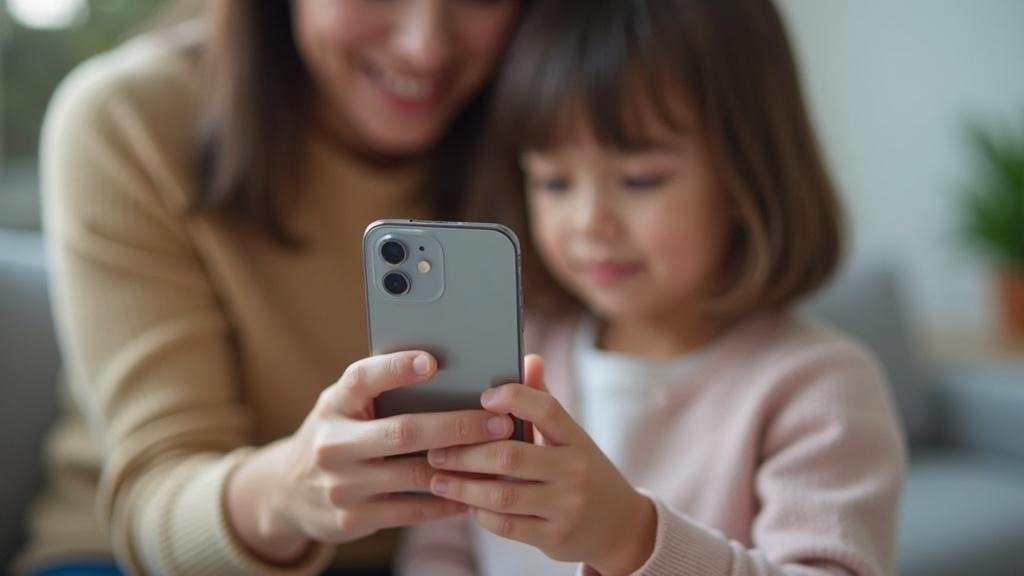
No-pressure speech apps matter for kids who shut down when practice feels like a test. I favored tools that invite repetition without turning every sound into a pass-fail moment.
Here’s how I’d build a shortlist for a kid who needs low-stakes, consistent practice between therapy sessions or who isn’t in formal therapy yet and needs somewhere to start.
1. Little Words
Start here. The app pairs a child (roughly ages 2 to 8, including kids with autism, ADHD, apraxia, and sensory sensitivities) with Buddy, an AI companion who holds actual back-and-forth conversations. The child just talks. No menus to read, no typing, no tapping through flashcards. Buddy listens, responds, and when a sound comes out wrong, he models the correct version in his own reply rather than flagging the child’s attempt as a mistake.
That framing matters enormously for kids who shut down at the word “wrong.”
What I find genuinely useful for parents: the SLP-style PDF reports. You can pull a session summary, note which target sounds were practiced (you set them yourself from a list that includes s, r, l, sh, th, and others), and hand it to your child’s therapist. That bridge between app and clinic is rare. Sessions run 5 to 20 minutes, there’s a mood check before each one so Buddy adjusts his energy, and the whole thing is COPPA-compliant with no ads and no data sold. You can try it out before paying anything.
Worth saying plainly: no app here, including this one, replaces a licensed speech-language pathologist. These are practice tools.
See also: The Next Generation of Network Technology
2. Speech Blubs
Speech Blubs takes a video-mirror approach. The app shows a child video clips of other kids and characters producing target sounds, and the child imitates into the camera using voice recognition to confirm the attempt. Over 1,500 activities cover categories from animal sounds to full sentence practice, and the content is built around kids with apraxia, autism, speech delay, and ADHD.
Monthly access runs about $14.49, or you can pay $59.99 to cover a full year, with a one-time lifetime purchase available at $99.99. The library is genuinely large. The voice-activation component means kids are producing sounds, not just watching, which matters for actual motor practice.
3. Articulation Station (Little Bee Speech)
Built by practicing speech-language pathologists, this one is openly a drill tool. That’s not a flaw. For older kids in formal therapy who need structured repetition of specific phonemes, Articulation Station is exactly right. It covers over 1,200 target words across all the major phonological patterns, and the Pro version runs about $59.99 as a one-time purchase rather than a subscription.
The word-level, phrase-level, and sentence-level practice structure mirrors how SLPs actually sequence articulation therapy. No mystery about the methodology.
4. Otsimo
Otsimo aims squarely at non-verbal and minimally verbal children and those with autism, apraxia, or Down syndrome. It uses AI-driven feedback across more than 200 exercises and prices considerably lower than most competitors, around $6.99 per month or roughly $4.49 per month when billed annually, with a lifetime tier at $115.99.
The AAC (augmentative and alternative communication) component makes it a different category of tool from pure articulation apps. If your child is working on initiating communication rather than refining specific sounds, Otsimo fits that earlier stage.
5. Tactus Therapy Apps
Tactus builds individual clinical apps, each targeting a narrow skill, sold separately at roughly $9.99 to $99.99 each. The model suits families who work closely with an SLP and want a specific tool the therapist has recommended, not a broad all-in-one platform.
The quality is clinical-grade and the focus per app is tight. The trade-off is that building a full toolkit adds up in cost quickly.
6. Constant Therapy
Constant Therapy started in the acquired-brain-injury space and expanded to cover a broader age and condition range. It uses evidence-based exercises with adaptive difficulty, tracks performance over time, and was designed with clinician input.
It runs on the heavier, more data-oriented end of the spectrum. For families managing complex communication profiles, that depth is a feature. For a 4-year-old who needs 10 minutes of fun practice before dinner, it’s probably more than necessary.
7. Teletherapy Plus a Free Baseline
Not an app, but worth naming. Platforms like Expressable connect families with licensed SLPs via video, which is a fundamentally different level of support than any app. ASHA (the American Speech-Language-Hearing Association) also publishes free, vetted resources and a provider-finder tool that costs nothing to use.
If budget is the constraint, public libraries often carry access to educational apps and early literacy tools that support speech development, particularly for pre-readers. It’s not a substitute for targeted practice, but it’s a real starting point.
How to Choose
For a pre-reader or a child prone to frustration, start with an app that requires zero reading and gives only positive feedback. For a child already in therapy who needs drilling at home, a structured articulation tool makes more sense. For a parent who needs to stay connected to a child’s SLP, the quality of the reporting feature matters as much as the content.
None of these apps diagnose a speech disorder. None treat one in the clinical sense. They extend practice into daily life, which is where real progress actually sticks.
Common Questions
Does Little Words actually share session data with a child’s speech therapist, or does the parent have to do that manually?
Manually, but it’s straightforward. Little Words generates a downloadable PDF summary after each session. The parent saves it and sends or brings it to the therapist. There is no direct clinic integration or auto-share feature. That one extra step is worth knowing about before you assume the handoff is automatic.
Is Speech Blubs useful for a child who is non-verbal or minimally verbal, or does it require some existing spoken output?
Speech Blubs works best when a child can already attempt some vocalization. The voice-recognition component needs something to detect. For children who are pre-verbal or minimally verbal, Otsimo’s AAC-oriented exercises are a more appropriate starting point than Speech Blubs’ imitation-based model.
What is the practical difference between buying Articulation Station Pro at $59.99 once versus subscribing to Speech Blubs at roughly $60 per year?
Articulation Station Pro is a one-time purchase with no recurring charges, covering over 1,200 target words in a structured drill format. Speech Blubs at $59.99 per year gives ongoing access to a broader, more video-heavy library that keeps updating. If your child needs tight phoneme drilling, the one-time purchase holds its value longer.
Can Constant Therapy be used independently by a child, or does it really need a clinician to set it up and monitor it?
Constant Therapy was designed with clinician oversight in mind, and it shows. The adaptive difficulty and detailed performance tracking make most sense when someone with a clinical background is interpreting the data. A parent can set it up independently, but without that context the depth of the platform is easy to misread or underuse.
At what age or communication stage does it make sense to move from an app like Little Words to actual teletherapy through something like Expressable?
If a child’s speech concerns persist after several consistent months of app-based practice, or if a parent suspects an underlying condition like apraxia or a phonological disorder, teletherapy is the right move regardless of age. Apps are maintenance and supplemental practice tools. A licensed SLP via Expressable or a similar platform can diagnose, set goals, and adjust them in ways no app currently can.
*Brief caveat: I do not have a financial relationship with any app listed here. App pricing can change; verify current rates in the App Store or Google Play before subscribing.*
Sources
- American Speech-Language-Hearing Association (ASHA), asha.org: information on speech disorders, teletherapy standards, and public resources
- Apple App Store and Google Play Store: verified pricing and descriptions for Speech Blubs, Articulation Station Pro, Otsimo, Tactus Therapy apps, and Constant Therapy
- Little Bee Speech official site: SLP credentials and methodology behind Articulation Station
- Otsimo official site: condition coverage and pricing tiers
- Expressable (expressable.com): teletherapy SLP platform overview